
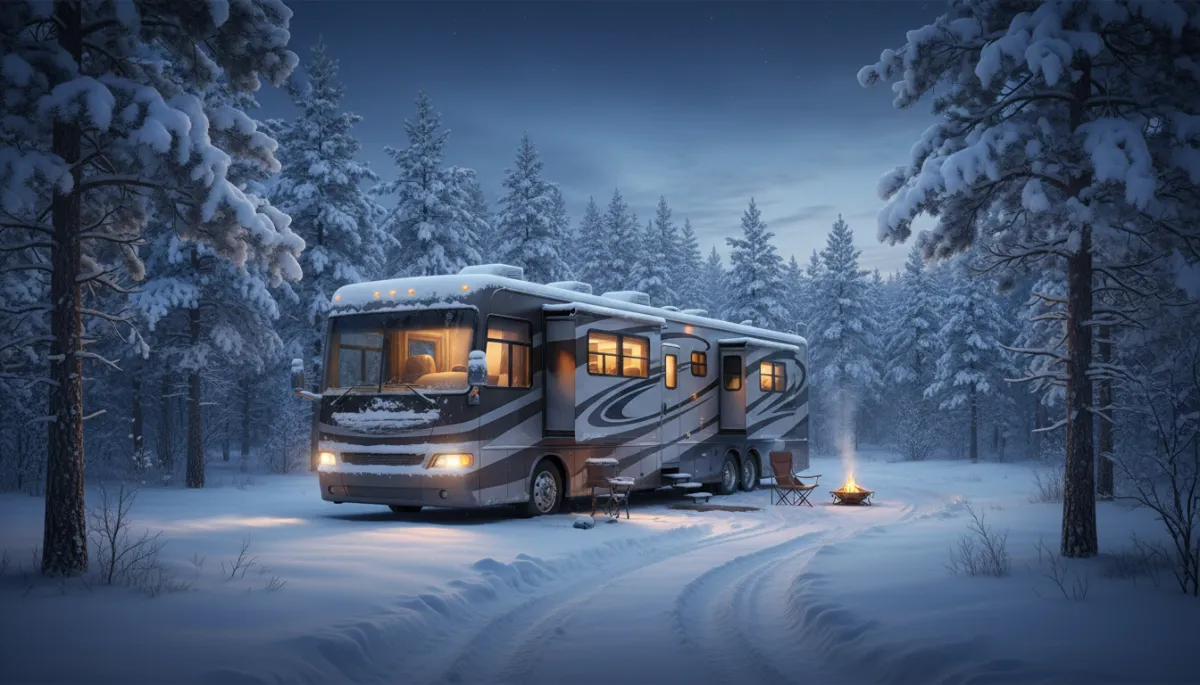
Winter RV Camping – 5 Essential Things You Should Know
Recreational Vehicle, RV Maintenance, RVing
Stay cozy, safe, and prepared on your next cold‑weather road trip with these five essential winter RV camping tips, packing ideas, and preparation steps.
Camping during the winter months presents a unique opportunity to experience nature free from summer tourists. Fewer crowds, cheaper rates, breathtaking snowy scenery, and hot chocolate by the fire make winter RV camping unforgettable.
Before you hit the road though, you’ll want a solid game plan. Winter is not the time to take a trip unprepared. With a bit of extra work and the right gear, winter camping becomes a cozy, rewarding adventure instead of a chilly headache.
Here are five essential things you should know about winter RV camping:
Tip #1 — Your RV Needs To Be Winterized
It’s critical that your plumbing and vital systems are protected. Frozen pipes can quickly ruin a winter trip. Insulating foam tubes and heat tape are effective ways to wrap exposed pipes and help prevent freezing. Some modern RVs have water tanks with built‑in heaters, so check to see if your rig has one. If not, take extra precautions so your tanks and lines aren’t damaged during extended sub‑freezing temperatures.
If you plan on regular winter adventuring, investing in an engine block heater is a smart way to ensure your engine doesn’t freeze. You should also inspect your RV batteries for corrosion or damage, confirm they’re fully charged, and make sure your engine has enough antifreeze in its system.
Don’t forget your RV’s furnace. Check for any visible damage and confirm there’s a clear path for air to flow properly. Cleaning the furnace with compressed air or a soft brush will remove dirt and debris, improve efficiency, and help ensure you’re breathing cleaner air all season long.
Tip #2 — Insulation Is Key
Take an honest look at your insulation. If you plan on camping in freezing temperatures, it might be time for an upgrade. Good insulation not only protects the internal workings of the vehicle, it also helps create a warm, comfortable living space you’ll actually enjoy spending time in.
Insulation around the base of the RV can keep wind, snow and rain, and winter critters from damaging the undercarriage and from sucking heat out of the RV. Adding rugs or foam mats to the interior floor adds another layer of insulation. This not only helps keep the warm air inside, it keeps your feet toasty—warm feet make a big difference on cold mornings.
Be sure to check the weather stripping around all the windows, skylights, and doors. What may seem like a small draft can actually cause you to lose a lot of warm air. Windows are a big culprit when it comes to heat loss. Adding thermal curtains, reflective window coverings, or even shrink wrap can help keep valuable heat inside where it belongs.
Tip #3 — Pack Wisely And Prepare For Anything
If you’re wondering, “What should I pack?” and “What can I leave in my RV?”—you’re asking the right questions. Start with what you would bring for warmer months, then add winter‑specific gear to cover cold, snow, and emergencies.
Be sure to bring:
- An ice and snow scraper
- Back‑up warm clothing and extra socks
- Sunblock and lip balm (winter sun and wind still burn)
- Extra food and bottled water
- A fully stocked first aid kit
- Sealant and spray lubricant for frozen or leaking seals
- A winter emergency roadside kit
Having a winter roadside emergency kit packed somewhere accessible can be a real lifesaver. Be sure to include heat blankets, candles, and matches. If you’re stranded in a remote area or stuck during an avalanche or whiteout, candles and a heat blanket go a long way in confined spaces. This backcountry skier has a great blog about winter emergency essentials.
There are numerous items you should pack in case anything unexpected occurs. Even if it feels like over‑packing, it’s better to be safe than sorry when temperatures drop.
Tip #4 — Safe Driving Starts With Tires
Before you pull out of the driveway—check your tires carefully. Look for proper tread depth, correct pressure, and any visible damage. You want to take care of any issues long before you’re on a snowy mountain pass with limited shoulder space to pull over.
If you plan on driving in snow, remember to pack your snow chains or have snow tires put on your RV. In many areas, if you’re driving over a mountain pass—especially in a snowstorm—chains are required by law. Also, remember to use low‑beam headlights in a snowstorm to reduce glare and improve visibility.
“Traction, visibility, and reduced speed are your best defenses when winter roads turn slick.”
Tip #5 — Double Check Your Reservations And Destination
Some RV resorts and campgrounds are open all year, but many operate with limited services during the colder months. It’s a good idea to speak to someone at the facility to find out what services are available prior to making a reservation so you know exactly what to expect when you arrive.
Before you depart, check the weather forecast and have an alternate travel route in mind in case there are road closures or chain requirements. It’s always wise to have a Plan B in the event of a travel snafu.
Happy Campers Know RVInsurances.com
We are the California RV insurance company that will help you get the right coverage you need for your vehicle, no matter what type. We offer boat insurance as well as coverage for many other recreational vehicles. Insuring your good time—whether you’re chasing powder or summer sunshine—is our specialty.
Contact us to get a free quote and to learn more about winter RV camping, cold‑weather preparation, and protecting your rig in every season.


