
Winterizing Your RV: A Step-by-Step Guide to Protect Your Investment
RV Tips
Winterizing Your RV: A Step-by-Step Guide to Protect Your Investment
As the chill of winter sets in, RV owners across the country face a crucial task – winterizing their RV. Whether you’re parking your RV for a few months or the entire season, failing to prepare it for freezing temperatures can lead to costly damage. Pipes can freeze, batteries can drain, and your cherished home-on-wheels can face unnecessary wear and tear.
At RVInsurances.com, we know how much you value your RV, and we’re here to help you protect it. This step-by-step guide will walk you through the essentials of winterizing your RV, saving you money and potential headaches come spring.
Why Winterizing Your RV Matters
Winterizing isn’t just about draining a few tanks – it’s about preserving the life of your RV. Frozen pipes can burst, water tanks can crack, and electrical systems may suffer if not properly maintained. By taking the time to winterize now, you avoid hefty repair bills later.
A well-winterized RV also holds its resale value better and ensures a smoother start to your next road trip when the warm weather returns.
Step 1: Drain and Flush the Water System
Water is your RV’s worst enemy during the winter months. If left inside, it can freeze and expand, damaging tanks, pumps, and pipes. Here’s how to handle it:
- Turn off the water heater and allow it to cool.
- Drain all water tanks – including fresh, gray, and black water tanks.
- Open the low-point drain valves and faucets to let water flow out.
- Use a water pump converter kit or siphon antifreeze directly into the system.
- Run antifreeze through every faucet, toilet, and shower until you see the antifreeze coming out.
Step 2: Protect the Battery
Cold weather can significantly drain your RV’s battery. Here’s what you can do:
- Disconnect the battery and store it in a temperature-controlled environment.
- Fully charge the battery before storage.
- Consider using a battery maintainer (trickle charger) to prevent it from discharging over the winter.
Step 3: Take Care of the Tires
Tires are often forgotten during winterization, but neglecting them can lead to flat spots and cracking.
- Inflate tires to the recommended pressure.
- Park your RV on wooden planks or tire covers to prevent direct contact with cold surfaces.
- Move the RV slightly every few weeks to avoid flat spots.
Step 4: Seal the Exterior
Gaps and cracks can let in moisture, causing mold and mildew. Perform a thorough inspection:
- Check for cracks around windows, doors, and vents.
- Reseal areas as needed with RV sealant.
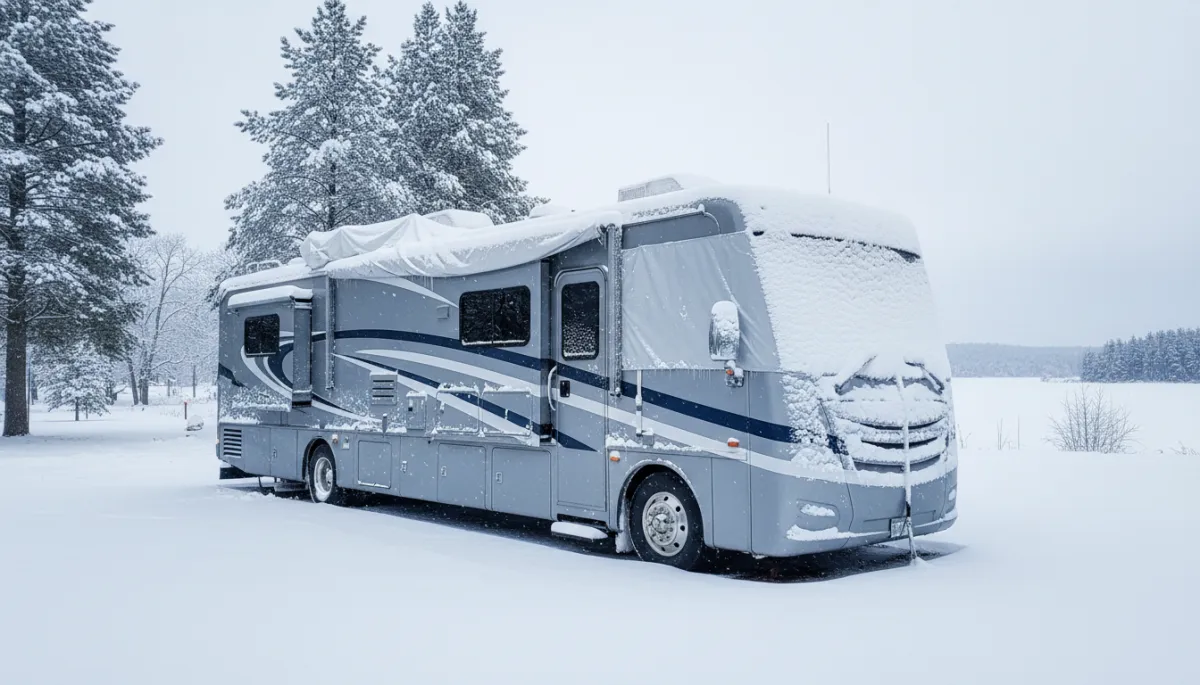
- Consider using an RV cover to shield the exterior from snow and ice.
Step 5: Interior Protection
Moisture inside the RV can lead to musty smells and mold growth. Here’s how to prevent it:
- Leave cabinet doors open to promote airflow.
- Place moisture-absorbing materials like DampRid around the RV.
- Clean the fridge, and leave the doors slightly open.
- Remove any perishable items and vacuum thoroughly.
Step 6: Fuel and Engine Care
If your RV has a motor, you need to protect the engine and fuel system:
- Add a fuel stabilizer to the gas tank.
- Run the engine for a few minutes to ensure the stabilizer circulates.
- Change the oil and replace filters to keep the engine in top shape.
Step 7: Insurance – Your Silent Winter Guard
Winterizing isn’t just about maintenance – it’s also about ensuring your RV is properly insured during the off-season. Unexpected storms, theft, and accidents can happen even while your RV is parked.
At RVInsurances.com, we offer policies designed to protect your RV year-round, whether it’s on the road or parked for the winter. Our comprehensive coverage includes:
- Storm and weather protection
- Theft and vandalism coverage
- Liability coverage for stored vehicles
Let’s see how much we can save you on RV insurance today. Get a free comparison quote now!
Final Thoughts
Winterizing your RV may seem like a chore, but it’s one of the best ways to protect your investment and ensure hassle-free adventures next season. With the right preparation – and the right insurance – you can rest easy knowing your RV will be ready to hit the road as soon as the snow melts.
Ready to safeguard your RV this winter? Contact RVInsurances.com for personalized RV insurance options that give you peace of mind all year long.


