
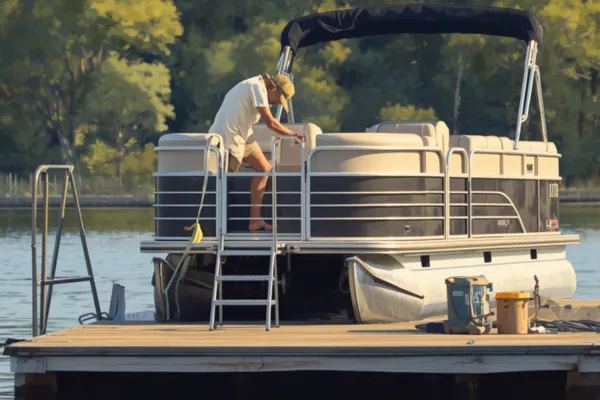
Making Sure Your Watercraft is Water Ready
There’s nothing quite like that first day back on the water. Whether you’re preparing your fishing boat for a weekend at the lake, getting the pontoon ready for family outings, or planning a summer of cruising, the anticipation starts long before you leave the dock.
But being ready for boating season involves more than filling the fuel tank and loading the cooler.
Before your first trip, it’s worth taking the time to make sure your watercraft is truly water ready. That means checking the condition of your boat, inspecting important safety equipment, reviewing your trailer, and making sure your watercraft insurance still matches the way you use your vessel.
At RVInsurances.com, we believe preparation and specialized insurance go hand in hand. Here’s what boat owners should consider before heading back onto the water.
Start With a Thorough Inspection
Even if your boat looked perfect when you stored it, a lot can happen while a watercraft sits unused.
Begin your season by inspecting the hull for visible cracks, damage, or other signs of wear. Look around fittings and seals for potential trouble areas and make sure drain plugs and related components are in good condition.
This is also the time to inspect your propeller, steering components, battery connections, fuel system, and electrical equipment. If anything looks damaged or questionable, having it professionally inspected before launching can save you from dealing with a much bigger problem later.
Your exact maintenance needs will depend on your vessel. A personal watercraft has different systems than a large cruiser, just as a bass boat has different equipment than a pontoon. Following your manufacturer's recommended maintenance schedule is always a smart starting point.
Check Your Safety Equipment
Your boat may be mechanically ready, but what about everything you need once you’re on the water?
Safety equipment should be inspected before the beginning of the season and periodically throughout the year. Requirements can vary based on your location, vessel type, and boating conditions, so make sure you understand the applicable federal and state regulations where you plan to operate.
At a minimum, take inventory of your personal flotation devices, fire extinguisher, visual distress signals when required, navigation lights, sound-producing devices, first-aid supplies, and communication equipment.
Don't simply confirm that these items are somewhere aboard. Make sure they're accessible, appropriate for your vessel and passengers, and still in usable condition.
Preparation may not be the most exciting part of boat ownership, but you'll appreciate the effort if something unexpected happens miles from the dock.
Don't Forget About Your Boat Trailer
For many boat owners, getting onto the water first requires getting safely to the water.
That makes your trailer an important part of your pre-season preparation.
Check the tires for proper inflation and signs of deterioration. Inspect the wheel bearings, lights, wiring, winch, safety chains, tie-downs, and hitch components. If your trailer has brakes, make sure they're functioning properly.
Remember that your watercraft faces risks before it ever reaches the launch ramp. Road accidents, theft, and equipment damage are all reasons to understand how your insurance applies both on and off the water.
Review Your Watercraft Insurance Before Launch Day
Your boat can be mechanically perfect and fully stocked with safety equipment, but there's another type of preparation that's easy to overlook: your insurance.
Watercraft insurance isn't necessarily something you should purchase once and then forget about.
Maybe you've upgraded your boat since last season. Perhaps you've installed new electronics, added specialized fishing equipment, purchased a new trailer, or changed where and how frequently you use your vessel.
Those changes can affect your insurance needs.
Specialized watercraft insurance may offer protection for your boat's hull and machinery, liability exposures, equipment, towing, wreck removal, pollution liability, and other risks associated with boating. Exact coverage varies by carrier and policy, so it's important to review your declarations, limits, deductibles, conditions, and exclusions rather than assuming a particular loss will be covered.
Make Sure Your Coverage Reflects Your Actual Boat
Boats tend to evolve.
A basic fishing boat can eventually be outfitted with expensive electronics and specialized gear. A family boat may gain new watersports equipment. Owners may upgrade motors, navigation technology, sound systems, or trailers.
The boat you're launching this summer might be worth considerably more than the boat you originally insured.
That's why an insurance review is so important.
Talk with your insurance professional about major upgrades and changes in how you use or store the vessel. Keeping receipts, photographs, serial numbers, and other documentation for valuable equipment can also make it easier to maintain accurate records.
The goal isn't simply to "have insurance." It's to have coverage designed around the watercraft you actually own today.
Think About What Happens If You Break Down
A breakdown in your driveway is frustrating. A breakdown on the water can be considerably more complicated.
That's why boat owners should consider their plan for getting assistance if their vessel becomes disabled.
Depending on the policy, specialized watercraft insurance may offer on-water towing or assistance coverage. Because benefits and limits vary, review the details before assuming towing is automatically included.
Knowing whom to contact and what your policy provides can make an unexpected breakdown easier to manage.
Understand the Risks Beyond Physical Damage
When people think about boat insurance, they often picture damage to the boat itself. But that's only part of the equation.
Liability is another important consideration. An accident on the water could involve another vessel, a dock, property, or injuries to other people.
There are also risks unique to boating that many owners don't think about until something happens. A damaged or sunken vessel, for example, can potentially create salvage, wreck-removal, or pollution-related expenses.
Specialized watercraft policies can address risks that aren't necessarily handled the same way under general home or auto insurance. That's one reason reviewing the actual policy—not simply assuming you're protected—is so important.
Make Insurance Part of Your Pre-Launch Routine
There's a satisfying moment when the boat finally hits the water and the season officially begins.
The goal is to reach that moment knowing you've prepared for more than just a good day in the sun.
Inspect your vessel. Check your safety equipment. Maintain your trailer. Review your insurance. And address potential problems before you're sitting at the launch ramp with a line of impatient boaters behind you.
Whether you're taking a fishing boat onto a Texas lake, cruising California's waterways, enjoying a pontoon on a quiet weekend, or taking your personal watercraft out for the summer, preparation helps you spend less time worrying and more time enjoying why you bought your watercraft in the first place.
Get Water Ready With RVInsurances.com
Making sure your watercraft is water ready isn't just about maintenance. It's about protecting the vessel you've invested in and preparing for the risks that come with life on the water.
At RVInsurances.com, we specialize in watercraft insurance for everything from personal watercraft and fishing boats to pontoons, classic boats, cruisers, and luxury vessels. We work with boat owners to identify specialized coverage options based on their vessel and boating needs.
Before your next launch, take a few minutes to make sure your insurance is as ready for the water as your boat is.
Ready to review your watercraft coverage? Contact RVInsurances.com today for a personalized watercraft insurance quote.
RVInsurances.com
Phone: 1-844-727-7207
Website: RVInsurances.com
Protect your investment, prepare for the unexpected, and enjoy your next day on the water with greater confidence.


